The Tapo C402 review centers on a solar-powered, wire-free camera kit designed to make outdoor monitoring easier to place and maintain.
Its mix of color night vision, person detection, and local storage suits households that want useful coverage without relying on an outlet at every camera location.
Tapo SolarCam Review Summary
The quick verdict
5,000+ ratings
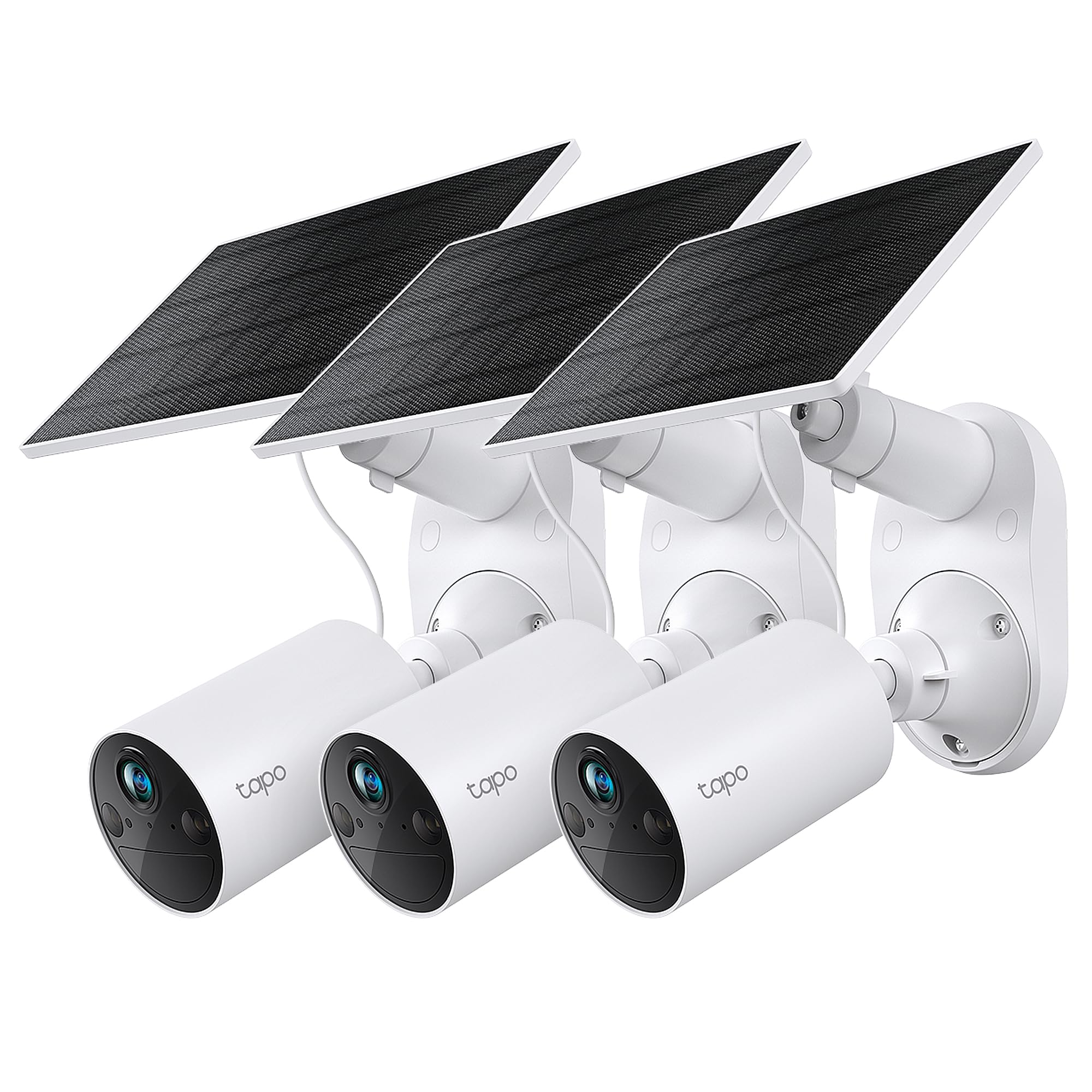
Read Amazon ReviewsTapo SolarCam C402 KIT
A three-camera solar kit for buyers who want wire-free outdoor monitoring, person alerts, and flexible local or cloud storage.
- Solar charging panel works with the camera’s built-in battery; the system can be installed as one unit or with the panel placed separately using a 13-foot cable.
- The product description gives up to 180 days of battery reserve from a full charge during cloudy periods and says 45 minutes of sunlight can provide a day’s charge under stated conditions.
- 1080p live view and color night vision using built-in spotlights, with night vision described up to 30 feet.
- Free person and motion detection, with activity zones that can be defined for monitoring.

Pros
- Solar charging and battery power make placement possible away from an outlet.
- The separate panel option helps place the camera for its view while positioning the panel for sunlight.
Consider before buying
- Solar performance depends on sunlight, and the charging estimate is tied to specified environmental and activity conditions.
- The 13-foot panel cable offers placement flexibility, but buyers should check whether it reaches a suitable sunny mounting spot.
Read the full review summary
The C402 KIT pairs a built-in battery with a modular solar panel, and the panel can mount beside the camera or up to 13 feet away using the included cable.
Tapo says 45 minutes of sunlight can provide a day’s charge under specified conditions, while a full battery can last up to 180 days during cloudy periods; actual results depend on sunlight and the described operating conditions.
Person and motion detection, configurable activity zones, 1080p live view, and color night vision address common outdoor monitoring needs.
Local microSD storage up to 512GB offers an option without a cloud subscription, while Tapo Care cloud storage remains available for buyers who prefer it.
The kit is a better fit for installation flexibility and solar charging than for buyers who need a wired camera or want to avoid all placement planning.
The buying factors
Tapo SolarCam Scorecard
Editorial scores reflect listed features and buyer fit; they are not laboratory measurements or customer ratings.
Power flexibility
The solar panel and battery avoid a nearby outlet, with up to 180 days of reserve claimed for a full charge under cloudy conditions.
Installation options
The camera and panel can be installed together or separated by the included 13-foot cable.
Video and night view
It provides 1080p live view and color night vision up to 30 feet, though the description gives no broader image-quality detail.
Detection controls
Free person and motion detection plus activity zones can help focus alerts on selected areas.
Storage flexibility
Local microSD storage up to 512GB is available alongside optional Tapo Care cloud storage.
Privacy features
Encrypted video and two-factor authentication are included features, though the description does not detail their configuration.
Weather-range planning
The camera is specified for -4°F to 113°F operation, while charging is specified for 32°F to 113°F.
Key Features and Specifications of Tapo SolarCam
- Solar charging panel works with the camera’s built-in battery; the system can be installed as one unit or with the panel placed separately using a 13-foot cable.
- The product description gives up to 180 days of battery reserve from a full charge during cloudy periods and says 45 minutes of sunlight can provide a day’s charge under stated conditions.
- 1080p live view and color night vision using built-in spotlights, with night vision described up to 30 feet.
- Free person and motion detection, with activity zones that can be defined for monitoring.
- Local microSD storage supports cards up to 512GB; Tapo Care cloud storage is also an option.
- Encrypted video and two-factor authentication are listed privacy features.
- Operating temperature range is -4°F to 113°F; charging temperature range is 32°F to 113°F.
Pros and Cons of Tapo SolarCam
Pros
- Solar charging and battery power make placement possible away from an outlet.
- The separate panel option helps place the camera for its view while positioning the panel for sunlight.
- Local storage provides a subscription-free footage option, with cloud storage available as an alternative.
- Person detection and customizable activity zones can make alerts more relevant.
Consider before buying
- Solar performance depends on sunlight, and the charging estimate is tied to specified environmental and activity conditions.
- The 13-foot panel cable offers placement flexibility, but buyers should check whether it reaches a suitable sunny mounting spot.
- The listed charging range starts at 32°F, narrower than the camera’s operating range; consider seasonal conditions at the intended location.
Who Should Buy Tapo SolarCam?
Good fit
Consider the C402 KIT if you want outdoor cameras that can be placed without a nearby power outlet and your planned locations receive enough sunlight for the panel.
The option to mount the panel separately can help when the best camera angle and brightest panel position are not the same.
It is also a reasonable fit if you want to choose between local microSD footage and cloud storage, and value person detection with adjustable activity zones.
Before buying, map out camera views, available sunlight, and the cable route, then check that the expected temperatures suit both operation and charging.
Who should skip it
Skip this design if the camera location has little or no usable sunlight and you need predictable power without periodic charging considerations. Check the light conditions across seasons before relying on the solar panel.
Look elsewhere if you require a wired connection, or if your installation must charge below 32°F. The supplied temperature ranges make those needs a poor match.
How the Tapo SolarCam Fits an Outdoor Setup
Solar placement shapes the setup
The camera and panel can be mounted together, or separated by the included 13-foot cable. That gives some freedom to aim the camera toward an entryway while placing the panel where it can receive more sunlight.
Measure the route and inspect the likely sun exposure before choosing mounting points; the stated charging time is based on specific conditions and should not be treated as a guarantee for every location.
Battery estimates depend on use and conditions
The description gives up to 180 days of reserve after a full charge for cloudy periods, and says 45 minutes of sunlight can provide a day’s charge under its specified assumptions, including up to 100 triggered events per day.
Those figures help frame the intended low-maintenance design, but actual sunlight, event frequency, and environment can change the result. A shaded or heavily triggered camera location deserves more careful planning.
Detection and storage support different routines
Person and motion detection with configurable activity zones can narrow what prompts an alert, which may be useful near busy streets or moving foliage.
Footage can be stored to a microSD card up to 512GB or through Tapo Care cloud storage.
Buyers who prefer local recording can plan for a card, while those who want cloud storage should review the subscription details before choosing that route.
Temperature limits merit a location check
The camera’s stated operating range extends from -4°F to 113°F, while its charging range is 32°F to 113°F. In a cold climate, this difference matters for where and when the battery can recharge.
Choose a mounting position with the local seasonal range in mind, particularly if winter charging is important to the setup.
Alternatives to Tapo SolarCam
One supplied alternative offers a useful but different kind of monitoring: a contact sensor rather than an outdoor camera.
Battery-focused alternative
700+ ratings
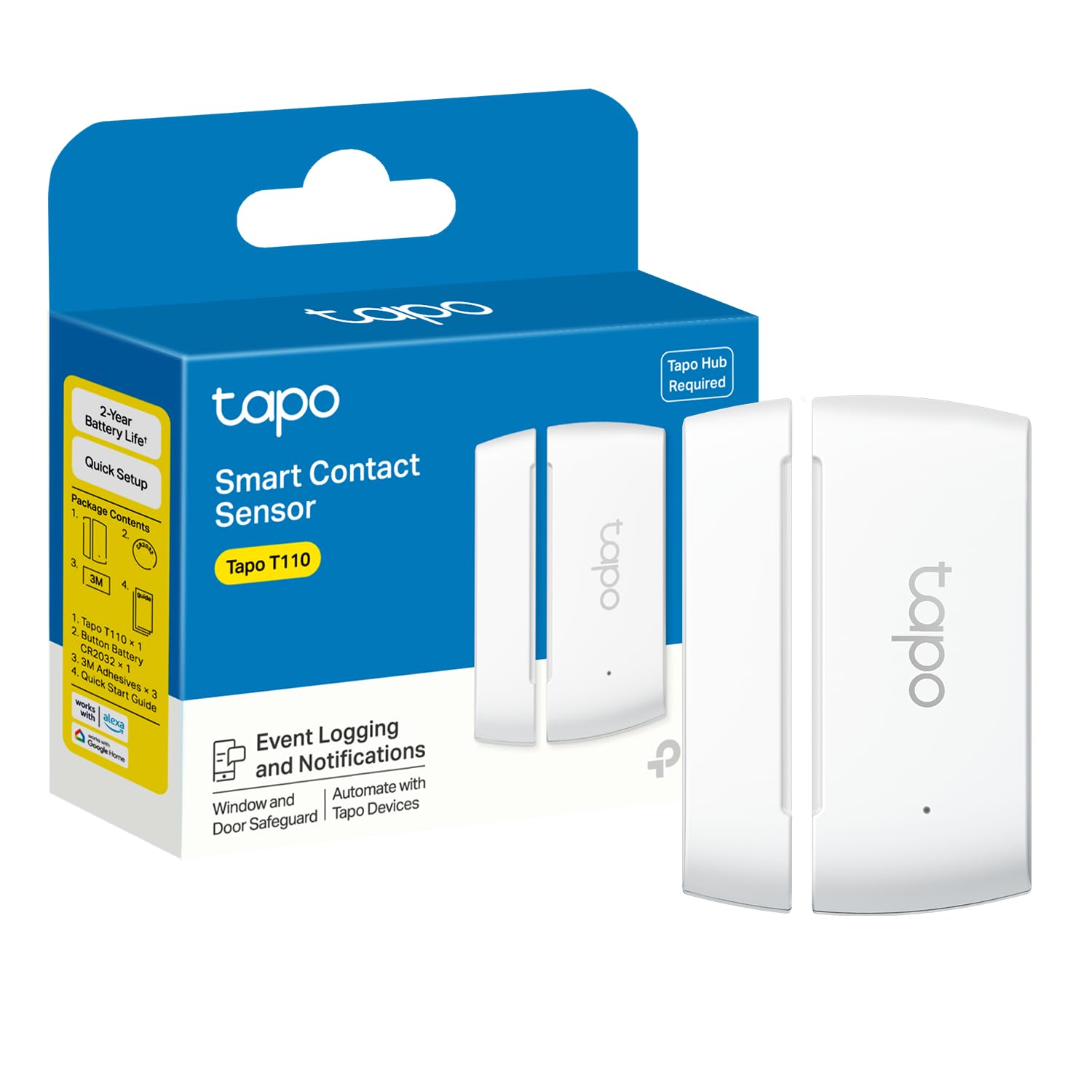
Read Amazon ReviewsTapo T110 Door Sensor Mini
Choose the C402 KIT when you need video monitoring of an outdoor area.
Choose the T110 when the main need is notification that a particular door, window, or other opening has changed state, and you already have or are willing to add the required hub.
- The Tapo T110 is a contact sensor for doors, windows, cabinets, and other items that open or close.
- It requires a Tapo hub and a 2.4 GHz Wi-Fi connection for the hub, and can send phone notifications or support smart actions; its listed battery life is up to two years at fewer than 30 triggers per day.
- The Tapo SolarCam C402 KIT is an outdoor video camera system with solar charging, person and motion detection, night vision, and local or cloud footage storage.
Is Tapo SolarCam Worth It?
The Tapo SolarCam C402 KIT is worth considering for buyers who want wire-free outdoor video, solar-assisted power, person alerts, and a choice of local or cloud storage.
Its panel placement options and color night vision add practical flexibility, while the stated charging and battery estimates depend on conditions.
Plan around sunlight, the cable’s reach, and the separate temperature ranges for operation and charging.
If those align with your installation, the C402 KIT brings together a useful set of monitoring features without requiring an outlet at each camera location.
Your review at a glance
5,000+ ratings
Read Amazon ReviewsTapo SolarCam C402 KIT
A three-camera solar kit for buyers who want wire-free outdoor monitoring, person alerts, and flexible local or cloud storage.
- Solar charging panel works with the camera’s built-in battery; the system can be installed as one unit or with the panel placed separately using a 13-foot cable.
- The product description gives up to 180 days of battery reserve from a full charge during cloudy periods and says 45 minutes of sunlight can provide a day’s charge under stated conditions.
- 1080p live view and color night vision using built-in spotlights, with night vision described up to 30 feet.
- Free person and motion detection, with activity zones that can be defined for monitoring.